
“The central thesis of game management is this: game can be restored by the creative use of the same tools which have heretofore destroyed it — axe, plow, cow, fire, and gun.”
– Aldo Leopold
In 2024, the Nemours Wildlife Foundation launched a new scientific research and management demonstration initiative exploring cattle grazing as a tool for wildlife habitat enhancement and rural economic sustainability. The axe, plow, fire, and gun have been tools in our research and management arsenal for years. This research initiative will add the missing fifth tool – the cow. The implications of this research program extend beyond the study area, offering a model for sustainable land management practices that can be applied in similar ecosystems across the Southeastern United States and throughout the world.
Why “Ecopasture”?
As we launched our new initiative, we explored the various terms and definitions for wildlife-friendly habitat enhancing grazing. Rotational grazing, patch-burn grazing, grass-fed, organic, and free-range all applied, but none captured our philosophy and intended outcomes. Silvopasture, the integration of forestry and grazing, came closest to what we hoped to achieve through our program, yet still did not fully capture the holistic nature of our program. Our initiative goes beyond simply grazing in forested habitat – we are working to achieve dynamic and synergistic biotic and abiotic outcomes – a full ecosystem response! Thus, the “Ecopasture Initiative” was born.
- Enhancing habitat: Studies show appropriately timed and rotated grazing can increase plant species diversity by up to 30%, creating a mosaic of vegetation heights crucial for various wildlife
- Benefiting wildlife: Light to moderate grazing can create open areas, increasing prey visibility by up to 50%, potentially reducing nest predation rates for ground-nesting birds
-
Sustaining our economies: Studies suggest that properly managed grazing programs can generate $10-$20 per acre per year for landowners, allowing them to maintain open space crucial for wildlife.
- Conserving an endangered breed: Pineywoods cattle are a historic landrace breed native to the Southeastern United States. They are descended from cattle brought to the Americas by Spanish explorers in the 1500’s and, over the centuries, have evolved to thrive in the warm, humid climate of the Southeastern pine forests where other breeds struggle to survive. Historically, they were crucial to the economy of the region, providing meat, milk, and draft power to early settlers and farmers. Pineywoods cattle are listed as critically endangered by the Livestock Conservancy, a nonprofit organization dedicated to the conservation of heritage livestock breeds. As part of our Ecopasture Initiative, we are working with the Pineywoods Cattle Registry and Breeder's Association and other partners to help conserve the genetics and resultant phenotypes that make Pineywoods cattle uniquely suited filling the large grazing ungulates niche in our southeastern ecosystem.
Benefits of Ecopasture
Key benefits include increased habitat diversity, provision of forage resources for both livestock and wildlife, and improved forest structure. Research in other regions has shown positive outcomes for various wildlife species, such as deer, turkey, quail, and songbirds, when silvopasture systems are implemented. Traditional land management practices, including prescribed fires and herbicide use, face challenges such as escalating costs, regulatory constraints, and concerns over their long-term ecological impacts. These issues necessitate exploring alternative approaches that provide both ecological and economic benefits. The economic potential of cattle grazing as part of an integrated working lands model is an emerging area of interest. Incorporating grazing diversifies income streams for landowners through synergistic livestock production in conjunction with timber management. This diversification can help mitigate the impact of fluctuating timber prices and provide a stable source of income, incentivizing land conservation and revitalizing rural economies.
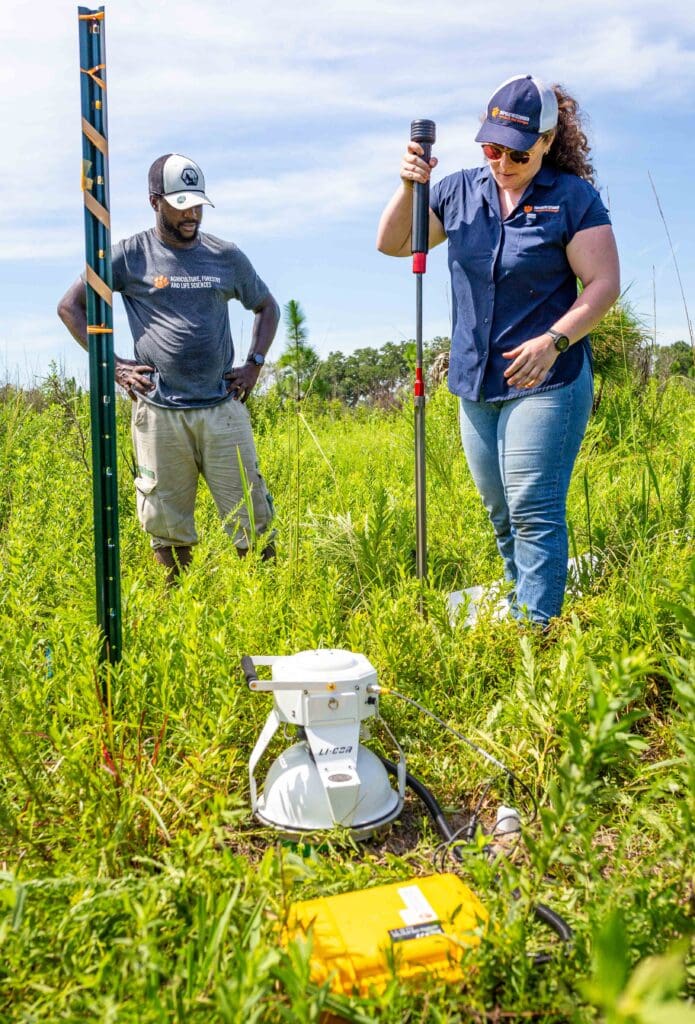
We are in the early phases of scientific ecopasture research. In addition to our in-house wildlife and habitat research program overseen by our wildlife biologist, Beau Bauer, we are partnering with USC-Beaufort to examine water quality and researchers from Clemson exploring carbon and soil responses. There is much more exciting research to come, so stay tuned!
Find out about our other stewardship programs below!