
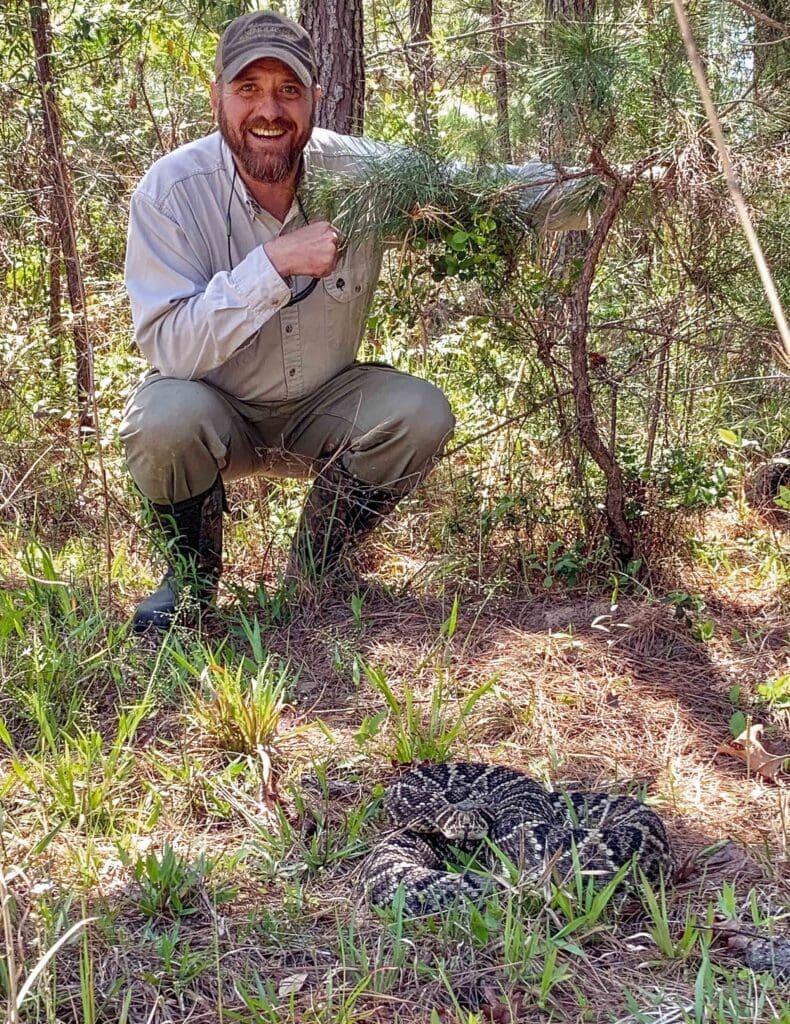
Nemours is home to a wide variety of upland habitats including stands of longleaf and savannas of loblolly pine, upland and bottomland hardwood forests, old fields, and planted wildlife food plots. Our forestry and upland management program is focused on maximizing these lands’ capacity to support a diversity of wildlife and plant species, and on restoring lost ecosystem functionality.
- Cleaning our air: In the U.S. forests absorb an estimated 1.6 billion tons of carbon dioxide per year, which is the equivalent to the annual emissions from all the automobiles in the US combined.
- Protecting our soils: Forests and grasslands prevent soil erosion and calamities such as mudslides by holding the soil in place with their root systems, with denuded areas eroding at 40 times the rate of areas with intact upland vegetation.
- Housing our biodiversity: Forests in the US are home to a spectacular diversity of life, including over 600,000 documented species of animals, plants, and fungi.
- Sustaining our economies: It is estimated that US forests annually directly or indirectly contribute over 600 billion dollars to the nation’s economy and support nearly 20 million jobs through timber, recreation, tourism, and products such as resins, fruits, nuts, and maple syrup.
We use a variety of tools in our upland management at Nemours. As many of the habitats are fire-dependent, the systematic use of rotational prescribed burns is a primary element of our management. The restoration of a pine-savanna ecosystem, including the reintroduction of keystone species such as endangered red-cockaded woodpeckers and eastern diamondback rattlesnakes, is one of our greatest achievements to date. Through strategic forestry practices and native flora planting, we are actively restoring additional acreage to a historic climax state, while simultaneously maintaining the early successional habitat required by other species such as American woodcock and yellow-breasted chat.
Find out about our other stewardship programs below!