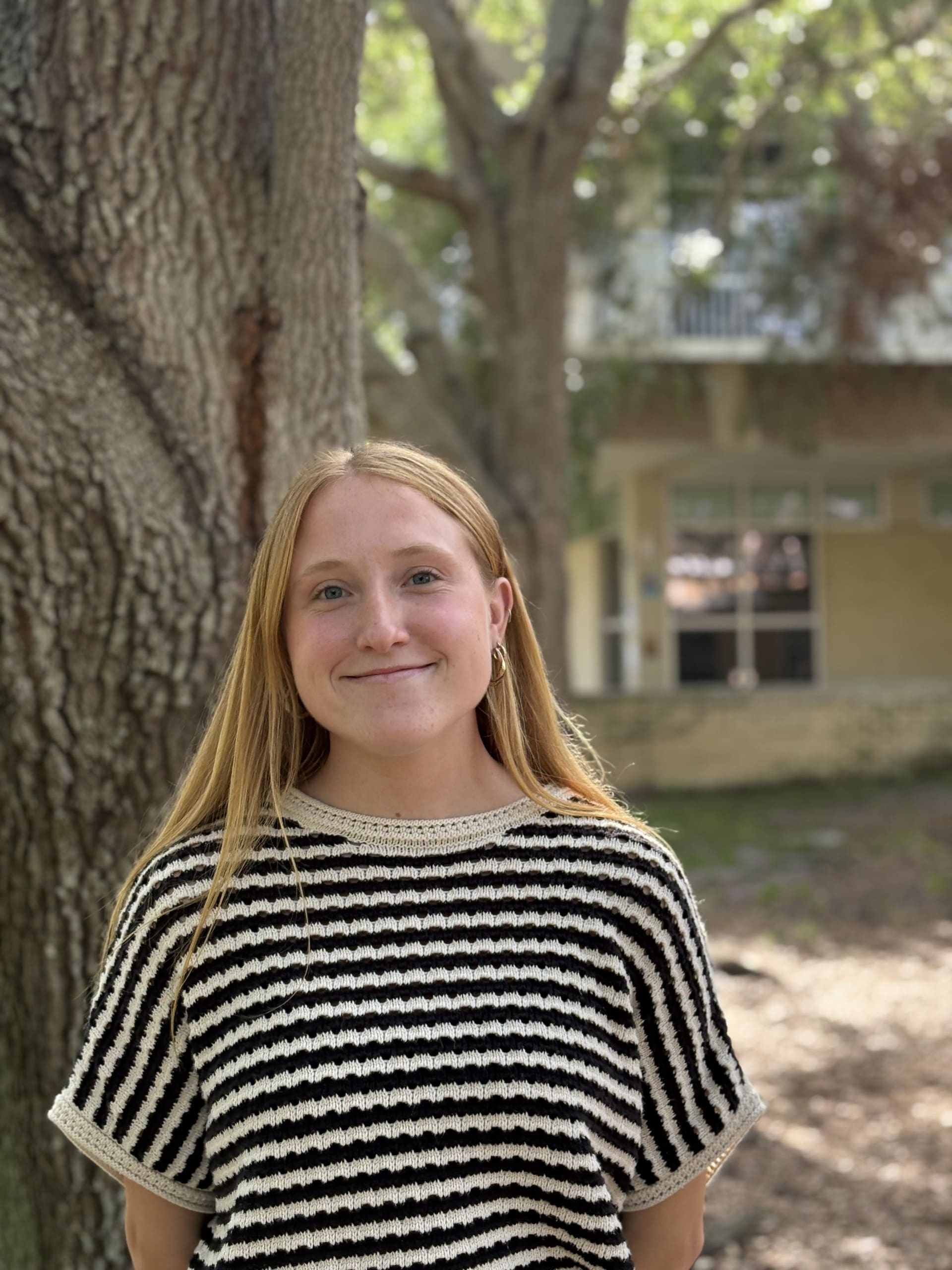
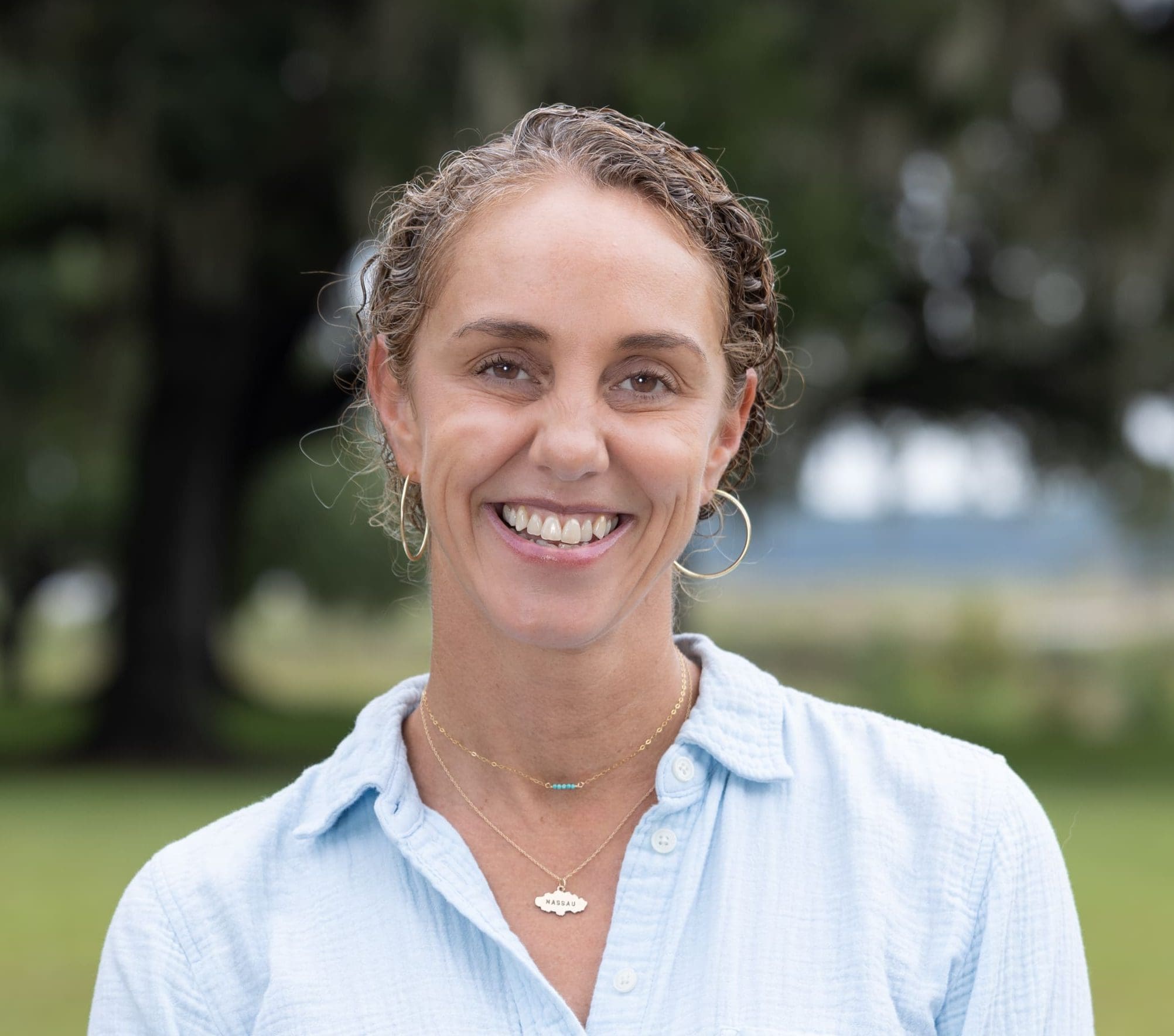
The following post was written by Carly Bricker, our Environmental Education Intern for 2026-27. Throughout her internship with Nemours Wildlife Foundation, Carly will bring her passion for wildlife, marine and coastal conservation, and bird watching to every experience. From her visits to Hilton Head as a child to her intensive field semester at college, she shares how these experiences have shaped her early career path. We’re excited for you to hear her story and are grateful to have her on our team!
Meet Carly
Hi, my name is Carly Bricker and I’m Nemours Wildlife Foundation’s new environmental education intern until June 2027. I’m from southern Ohio and recently graduated from Ohio Northern University (ONU) with a B.S. in Environmental and Field Biology and a minor in Spanish. While in college I participated in several extracurriculars such as Polar Paws, which trains service dogs, Parks and Recreation, Kappa Alpha Theta, a national social sorority, and more. Growing up I went on many family vacations to Hilton Head, SC but I haven’t ever been to Nemours or explored the ACE Basin. I’m excited to explore and learn all about the wildlife and nature that this area has to offer. For a while now, I have known that I wanted to work in the field of environmental sciences, but I didn’t quite have a career goal in mind. After four years of college I can say, at least, that I now know I want to work with animals as well as in education. For as long as I can remember I have had a great love for animals, especially birds and marine animals. I have a passion for wanting to help protect the world I live in and leave a lasting impact, whether big or small, on the environment around me.
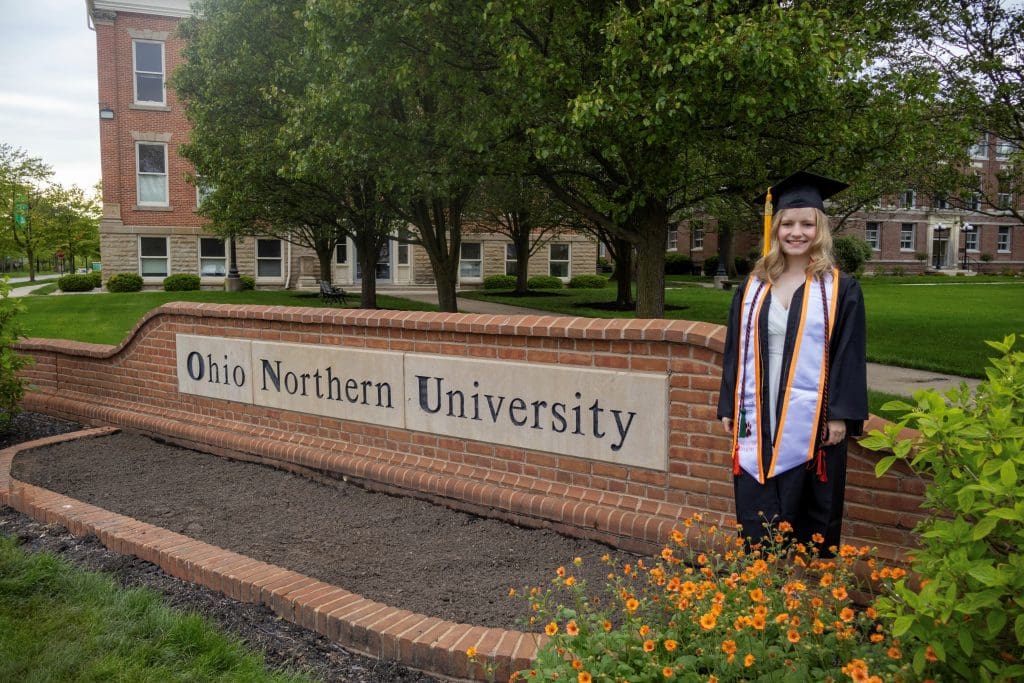
Photo 1: Carly wearing her graduation cap and gown at Ohio Northern University’s main sign.
As part of the Environmental and Field Biology major at ONU I completed what we call a field semester. During this semester I took courses on botany, entomology, ichthyology, coastal ecology, and marine and coastal conservation. By taking each of these courses and being able to immerse myself in the field, even more than I had already up to this point, I gained so much new knowledge. For instance, the ichthyology class taught me how to measure, handle, and identify fish. During the coastal ecology class, I learned how to identify loons and take data on specific individuals and groups. During marine and coastal conservation, I learned how to measure and tag horseshoe crabs. So, it’s safe to say that this semester gave me many experiences out in the field, many I will be able to use right here at Nemours.
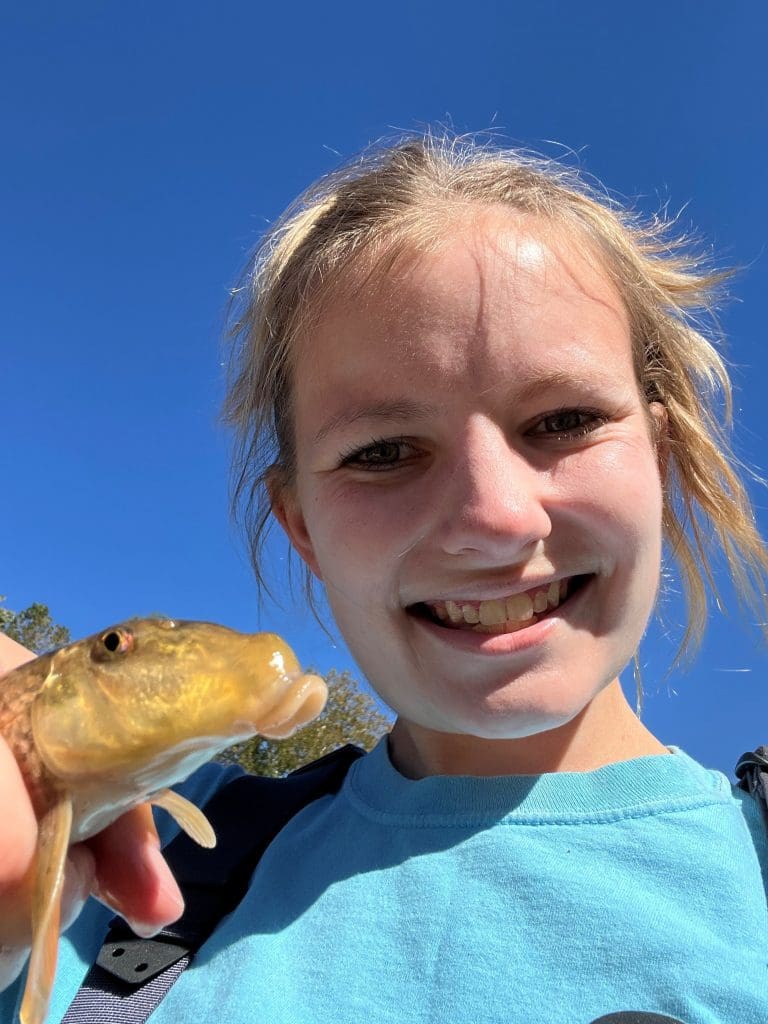
Photo 2: A Northern Hog Sucker (Hypentelium nigricans) caught during a river/stream survey in ichthyology class at Ohio Northern University.
Having only recently arrived at Nemours I would have to say that my favorite species, so far, is the Roseate Spoonbill. I have always been fascinated with brightly colored animals. I love the bright pink color of the spoonbills and how easily they can be spotted perched in a tree. There is so much variety as to what color(s) an animal can be. Spoonbills are unique not only for their bright color but also their flat, spoon-shaped beak that allows them to easily scoop food from the water. This is one of the many reasons I enjoy birds, among other animals. Animals help us humans to appreciate where we live and discover the uniqueness of a particular environment. During my time here at Nemours, I hope to gain an even greater appreciation and love for the environment and the world around me.
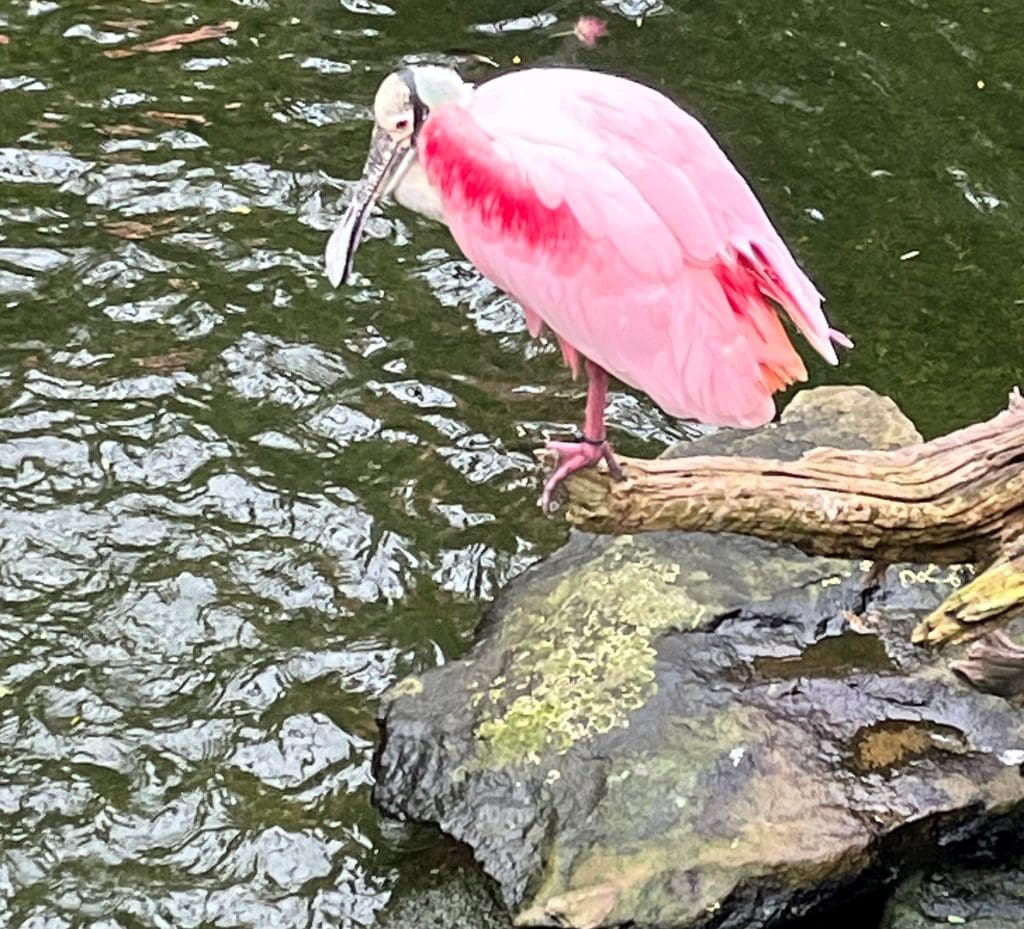
Photo 3: A Roseate Spoonbill (Platalea ajaja) seen at the National Aviary in Pittsburg, Pennsylvania.
Internships at Nemours
At the heart of our mission is offering educational opportunities to young men and women embarking on their career paths. Our Research, Education, and Land Stewardship Internships are designed to be fully immersive experiences providing hands-on, practical training in conservation concepts, techniques, and methodologies. We invite undergraduate level juniors and seniors or recent graduates (≤ 2 years post-graduation) in the fields of biology, ecology, education, wildlife management, or other related field to submit an application for our internship programs.
If you would like to support our Education program, please click here to donate today.